


DIY vs. Professional Trash Can Cleaning: Why This Is Not Child’s Play
A dirty trash can may seem like a simple problem.
Grab a hose. Spray it out. Add some soap. Maybe use a cleaner or deodorizer. Let it dry.
That is what most people think trash can cleaning is.
But the truth is, proper garbage bin cleaning is not child’s play.
Trash cans hold food waste, leaking bag residue, pet waste, spoiled liquids, seafood scraps, diapers, bacteria, grime, and foul odors. In the heat and humidity of the Coastal Carolinas, Horry County, and the Grand Strand, that buildup can get nasty fast.
And when it is cleaned the wrong way, it can create even bigger problems.
Cold Hose Water Does Not Compare to 200-Degree Hot Water
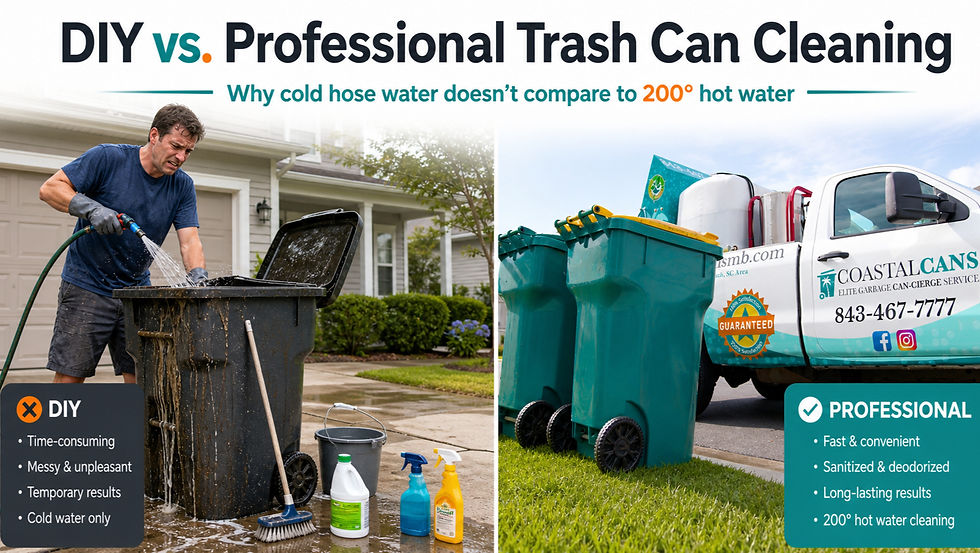
Most DIY trash can cleaning is done with cold water from a garden hose.
That may rinse off loose debris, but it does not compare to a professional cleaning process using high-temperature water.
At Coastal Cans , we use 200-degree hot high pressure water to help break down grime, remove odor-causing buildup, and clean areas a regular hose simply cannot handle.
Cold hose water may make the can look better for a few hours.
Hot water cleaning gets to the source of the problem.
That matters because odor is not just “a bad smell.” Odor is often caused by bacteria, residue, and organic waste breaking down inside the can.
The CDC explains that cleaning removes germs, dirt, and impurities from surfaces, while sanitizing goes a step further by reducing germs to safer levels.
That is why a real trash can cleaning process should be more than a quick rinse.
What Could Be Living Inside a Dirty Trash Can?

Most people do not think about what may be sitting inside their garbage cans.
But trash cans collect some of the dirtiest waste around the home.
Depending on what has been thrown away, dirty trash cans may contain residue connected to:
E. coli
Salmonella
Listeria
Campylobacter
Mold and mildew
Yeast and fungi
Pet waste bacteria
Foodborne bacteria
Odor-causing microbes
Maggots and fly larvae
Food safety guidance notes that bacteria that cause food poisoning multiply quickly between 40°F and 140°F, commonly known as the danger zone.
Now think about an outdoor garbage can sitting in the South Carolina heat with leaking food waste, seafood scraps, meat packaging, diapers, or pet waste inside.
That is not just unpleasant.
It is a sanitation issue.
The Problem With Kids Cleaning Trash Cans for Extra Money
Around South Carolina, it is not uncommon to see kids or teenagers offering to rinse trash cans for a few extra dollars.
On the surface, it may seem harmless.
But trash can cleaning can expose children to bacteria, chemicals, dirty wastewater, pest waste, sharp objects, and contaminated residue.
That is not a safe chore to treat casually.
Many DIY-style cleanings involve store-bought chemical sprays, bleach mixtures, scented cleaners, degreasers, or odor-control products. When those chemicals are sprayed into a dirty can and rinsed into the street, driveway, grass, or storm drain, the dirty water does not just disappear.
It can move into the surrounding environment.
That is a serious concern.
The EPA’s mission includes protecting human health and the environment from significant risks, including issues involving water and environmental contamination.
Trash can cleaning should be handled with the right equipment, the right process, and the right level of care.
This is not just about making a can smell nice.
It is about cleaning a contaminated container properly.
Dirty Runoff Is a Bigger Problem Than People Realize
When someone rinses a trash can in the driveway, dirty water can carry bacteria, food waste, chemicals, oils, and grime into areas where it does not belong.
That runoff may end up in:
DrivewaysGrassSidewalksStreetsStorm drainsNearby soilAreas where kids or pets play
That is one of the biggest differences between DIY cleaning and professional cleaning.
DIY cleaning often just moves the mess somewhere else.
Professional cleaning is designed to contain and control the mess better.
At Coastal Cans, the goal is not to spread dirty water around your property. The goal is to professionally clean, sanitize, and deodorize your cans with a process built for the job.
Why Professional Equipment Matters
A garden hose was not designed to sanitize a trash can.
A teenager with a spray bottle was not equipped to handle bacteria-filled bins.
A quick rinse does not solve odor at the source.
Professional trash can cleaning requires heat, pressure, process, and consistency.
That is why Coastal Cans uses high-temperature water and professional equipment to clean the inside of your cans more effectively than standard DIY methods.
The difference is simple:
DIY Trash Can Cleaning | Coastal Cans Professional Cleaning |
Cold hose water | 200-degree hot water |
Messy driveway runoff | Professional cleaning process |
Store-bought sprays | Service designed for garbage bins |
Odors often return | Cleaned, sanitized, and deodorized |
Risky for kids and pets | Handled by trained service provider |
Basic rinse | Professional bin cleaning |
This Is About More Than Odor
Yes, clean trash cans smell better.
But the real value goes beyond odor.
Professional trash can cleaning helps with:
Odor control
Bacteria buildup
Pest attraction
Curb appeal
Home cleanliness
Garage and driveway freshness
Rental property presentation
HOA and community standards
A cleaner environment around your home
If you own a home, manage rentals, run an HOA, or oversee properties in Horry County, the Grand Strand, Myrtle Beach, Carolina Forest, Conway, Surfside Beach, North Myrtle Beach, Murrells Inlet, Little River, Garden City, or surrounding South Carolina communities, trash can cleaning should not be overlooked.
The Coastal Cans Difference
Coastal Cans is not just rinsing garbage cans.
We provide a professional trash can cleaning service built around a cleaner, safer, fresher result.

Your cans are professionally:
Cleaned. Sanitized. Deodorized.
And for customers who want the finishing touch, we also offer our signature CanFreshners™, delivered and installed during your service visit to help maintain freshness between cleanings.

This is how you take a dirty, smelly, bacteria-filled garbage can and give it the professional attention it deserves.
Final Thoughts
Trash can cleaning may look simple, but it should not be treated like a casual side chore.
Cold hose water, store-bought sprays, and driveway runoff do not compare to professional cleaning with 200-degree hot water.
Dirty garbage cans can contain odor-causing bacteria, food waste, pet waste, pest residue, and contaminated liquid.
That is why this is not child’s play.
It is a serious cleaning service for one of the dirtiest items outside your home.
Experience The Difference with Coastal Cans — premium trash can cleaning for South Carolina, Horry County, and the Grand Strand.
Visit www.CoastalCansMB.com to choose your plan and schedule your service today.


Comments